You know, with all these advances in positioning tech, Antenas Rtk Gpshave really become pretty important nowadays. I was chatting with Dr. Emily Carter—she’s a geospatial tech expert at Precision GPS—and she mentioned, "The reliability of Antenas Rtk Gps systems has totally changed how we do high-precision surveying." It’s pretty clear how crucial these antennas are for getting accurate positioning all over the globe.
RTK, or Real-Time Kinematic positioning, really depends a lot on the quality of the antennas you’re using. Good Antenas RTK GPS can actually make measurements way more accurate, and that’s a big deal for fields like farming, construction, and mapping. But here’s the thing— not all antennas are built the same. Some might not be sensitive enough for really precise work, which can lead to questionable data at times.
So, if you’re thinking about investing in a good Antenas RTK GPS, it’s super important to consider things like frequency response, build quality, and how well it handles different environmental conditions. Every project has its own quirks, right? That’s why taking a moment to reflect on your specific needs can help you pick the best antenna for the job, ensuring top-notch performance, especially when it really counts. And as the tech keeps moving forward, staying updated and flexible is definitely the way to go.
Top Features to Look for in RTK GPS Antennas
When choosing Rtk Gps Antennas, specific features are essential for effective performance. High precision is key. Look for antennas that offer multi-frequency capabilities. This ensures better accuracy under varying conditions. An antenna that can receive multiple GNSS signals enhances the positioning solution dramatically. A unit with a quality signal-to-noise ratio can improve reliability in complex environments, such as urban settings.
Durability is another crucial aspect. Consider the environmental conditions where the antennas will be used. Many antennas are designed to withstand extreme weather. They should also have robust housings to protect internal components. Additionally, some antennas come with built-in surge protection, safeguarding your investment. Another feature worth noting is the ease of installation. This impacts not only deployment speed but also overall usability in the field.
Compatibility with other devices is vital. An RTK GPS antenna should seamlessly integrate with various receivers and software. Ensure that it supports the necessary communication protocols. User-friendliness plays a significant role in efficiency. Many antennas offer intuitive interfaces for adjustments. You may find some models challenging to set up initially. Reflection on users’ experiences can guide better choices in the future. For those seeking Antenas Gnss Y Gps, focusing on these features will lead to a more precise and reliable positioning experience.
Comparison of Leading RTK GPS Antenna Brands
When it comes to RTK GPS antennas, there are several key brands that stand out. Each brand offers different features that cater to specific user needs. Some antennas excel in urban environments, while others perform better in open fields. The variability in performance arises from factors like signal frequency and design.
A crucial aspect of choosing the right device is understanding the signal reception capabilities. Some models utilize advanced multipath mitigation technology, which is essential in complex environments. Users have reported that certain antennas struggle with signal loss in densely constructed areas. This inconsistency can impact accuracy and reliability.
Moreover, the weight and build of the antennas matter significantly for portability and ease of use. Some antennas are surprisingly compact yet highly effective. Generally, the more durable models come with enhanced weather resistance. However, durability often adds weight, leading to trade-offs. Therefore, prospective buyers should assess their own specific requirements before making a decision. Antenas Gnss are becoming increasingly popular for their reliability in various conditions.
How RTK GPS Technology Enhances Positioning Accuracy
RTK (Real-Time Kinematic) GPS technology significantly enhances positioning accuracy across various applications. This advancement allows for centimeter-level precision, a breakthrough when compared to conventional GPS that typically offers meter-level accuracy. According to a report from the International Association of Geodesy, RTK GPS systems can provide positioning up to 10 millimeters, ideal for surveyors and engineers who require precise measurements.
The integration of RTK technology with GNSS (Global Navigation Satellite System) networks enables real-time data correction. This feature emerges from corrections transmitted from base stations. As of recent findings, over 80% of surveyors report increased efficiency thanks to this dynamic correction capability, transforming project timelines and costs. The importance of precision in fields like agriculture is underscored by data from the Precision Agriculture Association, noting that accurate positioning can improve crop yield by up to 20%.
While RTK GPS systems offer remarkable accuracy and reliability, challenges persist. Obstructions such as tall buildings or dense foliage can disrupt satellite signals. Additionally, the initial setup costs can be high, which may deter some users. Continuous advancements in RTK technology aim to address these limitations, but there remains a need for further development, particularly in urban areas where signal interference is pronounced. Still, the potential for RTK GPS continues to intrigue experts and professionals alike.
Applications of RTK GPS in Various Industries
RTK GPS technology has transformed industries by providing precise location data. Its applications span agriculture, construction, surveying, and more. In agriculture, farmers use RTK GPS for accurate planting and harvesting. This precision reduces waste and enhances yield. The technology helps to define field boundaries accurately, allowing for better management of resources.
In construction, RTK GPS plays a vital role in project accuracy. Surveyors rely on this technology for setting out and measuring distances. Accurate positioning ensures structures are built as designed, minimizing costly errors. The ability to collect real-time data helps in tracking progress, leading to more efficient project management.
Despite its benefits, RTK GPS does have limitations. Signal interruptions can reduce accuracy, especially in dense urban areas. Also, the setup and maintenance of RTK systems require specialized knowledge. Training personnel is essential, yet it poses challenges for some organizations. Although RTK GPS provides high accuracy, it is not infallible. Industries must weigh these factors when implementing such technology.
Top Antenas RTK GPS for Accurate Global Positioning Solutions
| Antenna Model | Frequency (GHz) | Accuracy (cm) | Weight (kg) | Application |
| Model A | 1.57 | 2 | 0.5 | Agriculture |
| Model B | 1.575 | 1.5 | 0.6 | Construction |
| Model C | 1.575 | 2.5 | 0.4 | Surveying |
| Model D | 1.575 | 1.8 | 0.55 | Marine |
Factors Affecting RTK GPS Antenna Performance
When considering Rtk Gps antenna performance, various factors come into play. The quality of the antenna design significantly impacts the accuracy of positioning solutions. Antennas must efficiently receive signals from multiple satellites to deliver precise data. Environmental conditions also play a crucial role. For instance, tall buildings or dense trees can obstruct signals, leading to degraded performance.
Another important aspect is the frequency band used by RTK GPS systems. Certain applications benefit from higher frequency bands, which can improve signal resolution. However, these bands are more susceptible to interference. Users must balance between sensitivity and the risk of noise.
Placement of the antenna is vital; it should be elevated and clear from potential obstructions. This setup can greatly enhance signal strength.
Users often overlook
the importance of regular maintenance and calibration. Neglecting these can lead to inaccuracies over time. Reflection on how and where the RTK GPS system is used can also yield insights for improvements. Achieving optimal performance requires continuous assessment of both equipment and its operating environment.
Installation and Setup of RTK GPS Antennas
When installing and setting up RTK GPS antennas, precise placement is crucial. Optimal performance depends on the line of sight to satellites. A height of at least 2 meters above ground level is often recommended. Additionally, steer clear of objects that may obstruct signals, such as buildings or tall trees. In rural areas, this may be easier to achieve compared to urban settings.
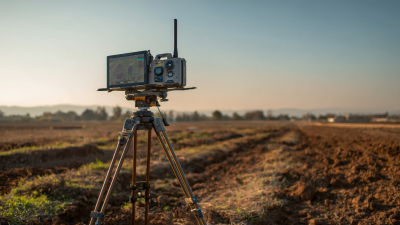
Tips: Use a surveyor's tripod for stable mounting. Ensure that the antenna is leveled using a bubble level. If possible, conduct a pre-installation survey to identify potential interference sources. A recent industry report noted that over 30% of inaccuracies stem from improper installation.
Connecting to the receiver requires attention too. Ensure all cables are secured and checked for damage. It’s recommended to keep the Gps Rtk system firmware updated. This can enhance accuracy and reliability. Some users overlook this step, which results in subpar performance. Regular maintenance checks should also be part of your setup protocol.
Maintenance Tips for Maximizing RTK GPS Antenna Longevity
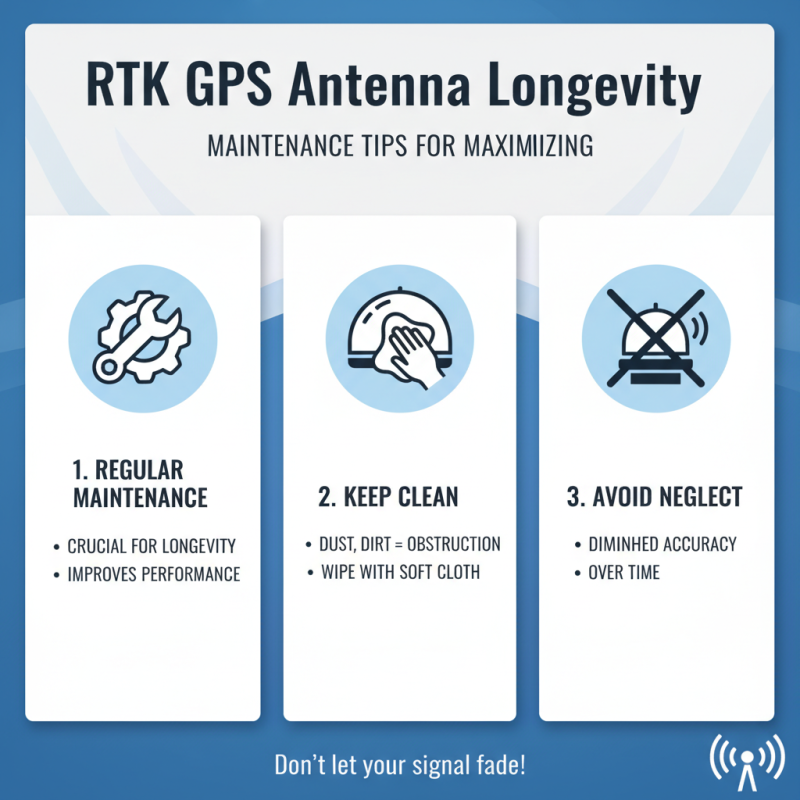
Regular maintenance of RTK GPS antennas is crucial for ensuring their longevity. Keeping antennas clean can significantly improve their performance. Dust, dirt, and debris can obstruct signals. A simple wipe with a soft cloth can do wonders. Remember, neglecting the antenna can result in diminished accuracy over time.
Inspecting connections is another key component. Loose or corroded connections can lead to signal loss. Regularly checking and tightening any loose connections can prevent future problems. Additionally, storing antennas properly when not in use is essential. Exposure to harsh weather conditions can degrade the materials. Using a protective case may seem unnecessary but can save the antenna from great damage.
One common mistake is ignoring software updates. Outdated software can cause compatibility issues and affect performance. Setting reminders for updates can help maintain efficiency. Even small oversights, like misplacing the antenna temporarily, can lead to subpar performance. Being vigilant about these details can ensure that every positioning solution remains accurate and reliable.
Leveraging GNSS RTK Technology in the TS8i Pro Rugged Tablet: A Deep Dive into Industry Reports and Enhanced Positioning Solutions
The integration of GNSS RTK technology within rugged tablets has revolutionized the fields of surveying, construction, and land management. The TS8i Pro RTK Android tablet stands as a testament to this advancement, equipped with a cutting-edge 1408 channels Gnss Module that ensures centimeter-level measurement accuracy. This level of precision is essential for professionals who rely on accurate data to make informed decisions and streamline their workflows.
Designed not only for durability but also for ease of use, the TS8i Pro caters to the needs of various industries by providing a powerful computing platform capable of handling intensive applications. The sophisticated technology embedded within this device allows users to conduct real-time data collection and analysis, enhancing productivity in field operations. Its rugged design ensures reliability in challenging outdoor environments, making it an indispensable tool for professionals tasked with managing large-scale projects or conducting detailed surveys.
The fusion of advanced GNSS RTK technology and user-friendly features results in a state-of-the-art solution that elevates operational efficiency. With the capability to deliver enhanced positioning solutions, this tablet empowers users to achieve remarkable feats in their respective domains, ultimately contributing to more accurate project outcomes and improved resource management. The continuous evolution of such technology reinforces its significance in an increasingly data-driven world, where precision is more than just a benefit; it is a necessity.
FAQS
: Consider signal reception capabilities, weight, durability, and specific environmental challenges you may face.
Tall buildings and dense trees can obstruct signals, leading to reduced accuracy in urban areas.
Agriculture, construction, and surveying benefit from RTK GPS for precise location data and efficient management.
No, it can experience signal interruptions, especially in complex environments, affecting accuracy.
An elevated position free from obstructions enhances signal strength and overall accuracy of data.
Yes, regular maintenance and calibration are essential to avoid inaccuracies over time.
Yes, a more durable antenna may weigh more, affecting portability and ease of use.
Higher durability often means added weight, impacting portability versus performance needs.
Specialized knowledge is essential for setup and maintenance, posing challenges for some organizations.
Higher frequencies improve signal resolution but may also increase susceptibility to interference.
Conclusion
In the quest for accurate global positioning solutions, selecting the right Antenas Rtk Gps is crucial. Key features to consider include signal strength, frequency response, and compatibility with various RTK receivers. Understanding how RTK GPS technology enhances positioning accuracy can significantly impact industries ranging from agriculture to construction. For effective use, it’s essential to consider factors affecting antenna performance, such as environmental conditions and installation techniques.
Furthermore, proper installation and setup are vital to optimize the functionality of Antenas Rtk Gps, ensuring that users achieve the highest accuracy possible. Regular maintenance also plays an important role in extending the longevity of these antennas, allowing for reliable performance over time. By paying attention to these aspects, users can fully leverage the advanced capabilities of RTK GPS technology across diverse applications.